# My story
> From a small town in Karnataka with no path into engineering, to building companies from zero. The long version.
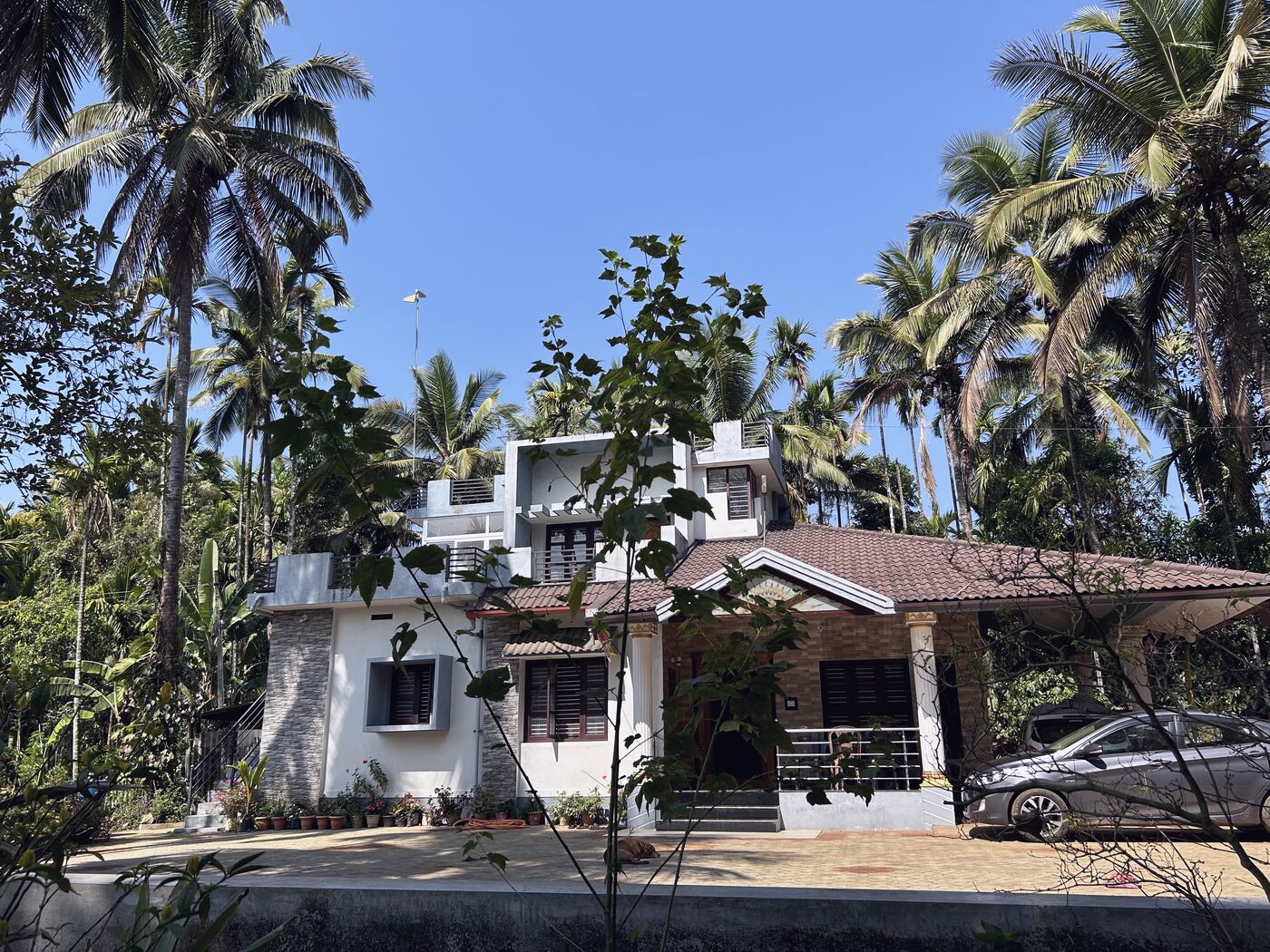
My parents' home in rural Karnataka. They built the farm the way you build a company.
## Where I come from
My parents are farmers. When I was young, all they had was about four acres of overgrown land, most of it thorny bamboo. They cleared it and built a working farm on it the way you'd build a company: showing up every day, planting, failing, trying the next thing. Today it grows areca nut, pepper, and coffee, alongside banana, coconut, mango, and oranges. Getting there took years of experiments, sericulture, cocoa, vanilla, palm oil, even a small restaurant, most of which didn't work, until enough of them did.
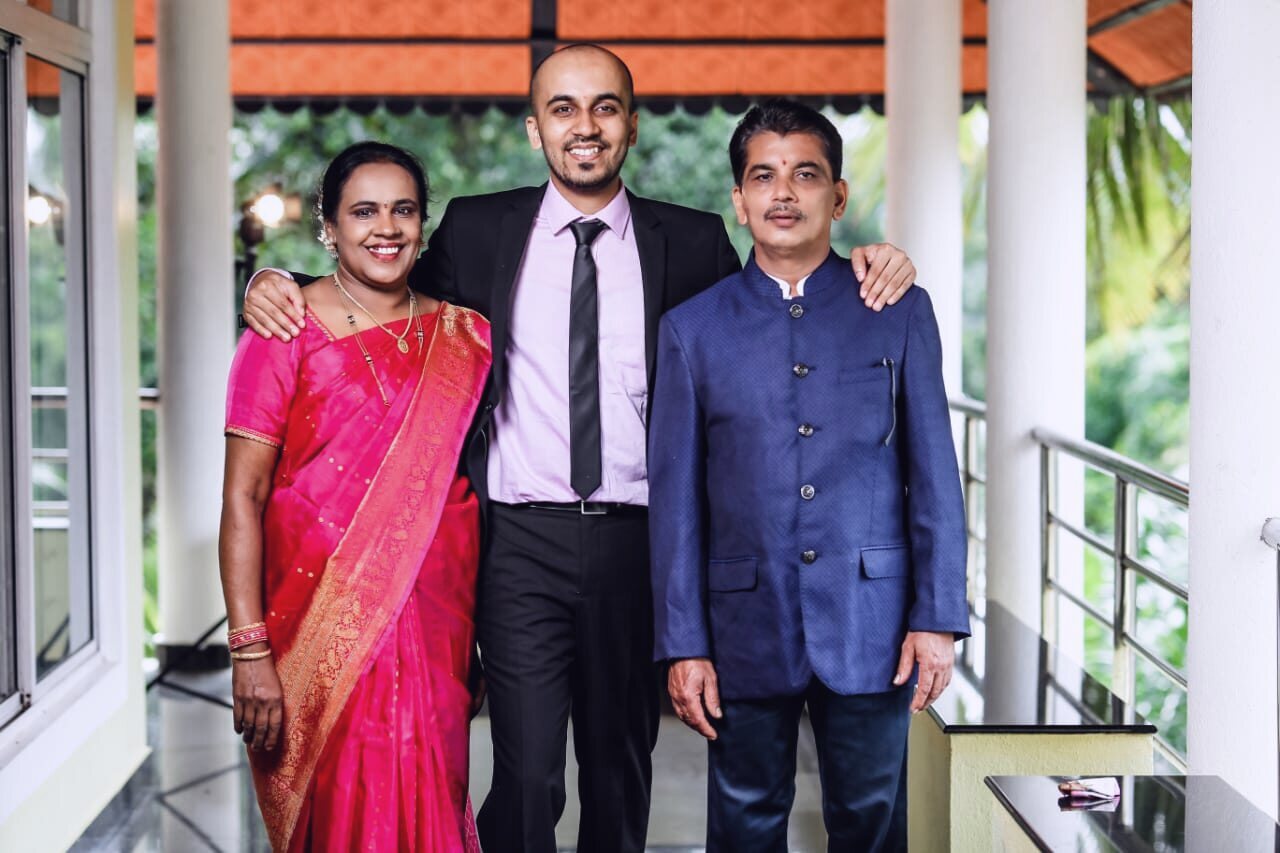
My mother worked the land alongside my father and ran the household, and she funded much of our schooling through a women's self-help group, the kind of local lending circle that exists where banks don't reach. My father took work away from home for weeks at a time to cover the gaps. I spent more of my childhood around that effort than around my parents themselves.
Nobody handed them anything. They made hard land productive by being patient and relentless, and I watched it happen up close. That is where my work ethic comes from.
My parents. They turned four acres of overgrown land into a working farm.
## Where I started
I grew up in a small town in rural Karnataka. There was no path into engineering from where I was. No one around me did this kind of work, and the resources were thin. From my teens I lived in relatives' houses so I could stay in school, first through pre-university and then most of my degree. When you are a guest in someone else's home, you learn to stay quiet, stay useful, stay out of the way. I had no fallback. So I studied.
There was no backup plan. There was studying, or there was nothing.
## Learning to code
I learned to code at 14. My first language was Q-BASIC. I still remember the feeling of typing something and watching the machine do exactly what I told it, no more and no less. That was the first thing in my life that paid back effort at a clean exchange rate. You put in the work, the program ran. No politics, no luck, no asking anyone for a favor.
In 12th grade I scored 99 out of 100 in Computer Science. I was the only person in my school to do it, and the first time anyone there had. The number is not the point. It was the first hard proof that the thing I loved doing was also something I could be good at, measured against everyone else.
## Getting into engineering
I placed in the top 1% of the state engineering entrance exam, in a state of about 50 million people (rank 2,728). That got me a seat in a Bachelor's in Computer Science Engineering, and an education loan covered the degree. I graduated First-Class with Distinction.
I want to be plain about what those numbers were for. A rank is a door. It does not make you good at the work, and it does not follow you for long. But for someone with no connections and no margin for error, the exam was the one mechanism that did not care where I came from. You answered the questions or you did not. I answered them.
## Failing the only interview on campus
TCS was the only company that came to our campus, and I failed the first round in my final year. There was no plan B. I wasn't going to do an MS abroad like many classmates, and in my family I would be the one supporting my parents as they got older. I needed a job.
So I worked. I'd had my own laptop since second year, a Compaq I was proud of, and I was always coding, grinding LeetCode. After the rejection I started building real things: small tools in PHP, C, and C++, an invoicing tool, a hotel-management tool, which I gave away for free. There was no AI to lean on, so I read and wrote code for hours. By the time I graduated I had six offers: Applied Materials, Huawei, Broadcom, Manhattan Associates, BlueJeans, and TCS, which I cleared off-campus against more than a million applicants after it had passed on me on campus. I finished with the highest offer in my batch, without being placed on campus at all.
## Leaving home
I started my career in Bangalore. In 2017 I moved to Munich, Germany, and stayed until 2019. Since 2019 I have lived in Oslo, Norway.
Moving countries strips you down to what you can actually do. Nobody in Munich knew the kid who scored 99, and nobody in Oslo cared about a state rank from years earlier. Every move reset the proof to zero. You walk in with no story attached to your name, and you build it again from the work in front of you. I have now done that twice in two languages I did not grow up speaking. It teaches you to travel light, and to trust output over reputation. Reputation does not cross borders. Output does.
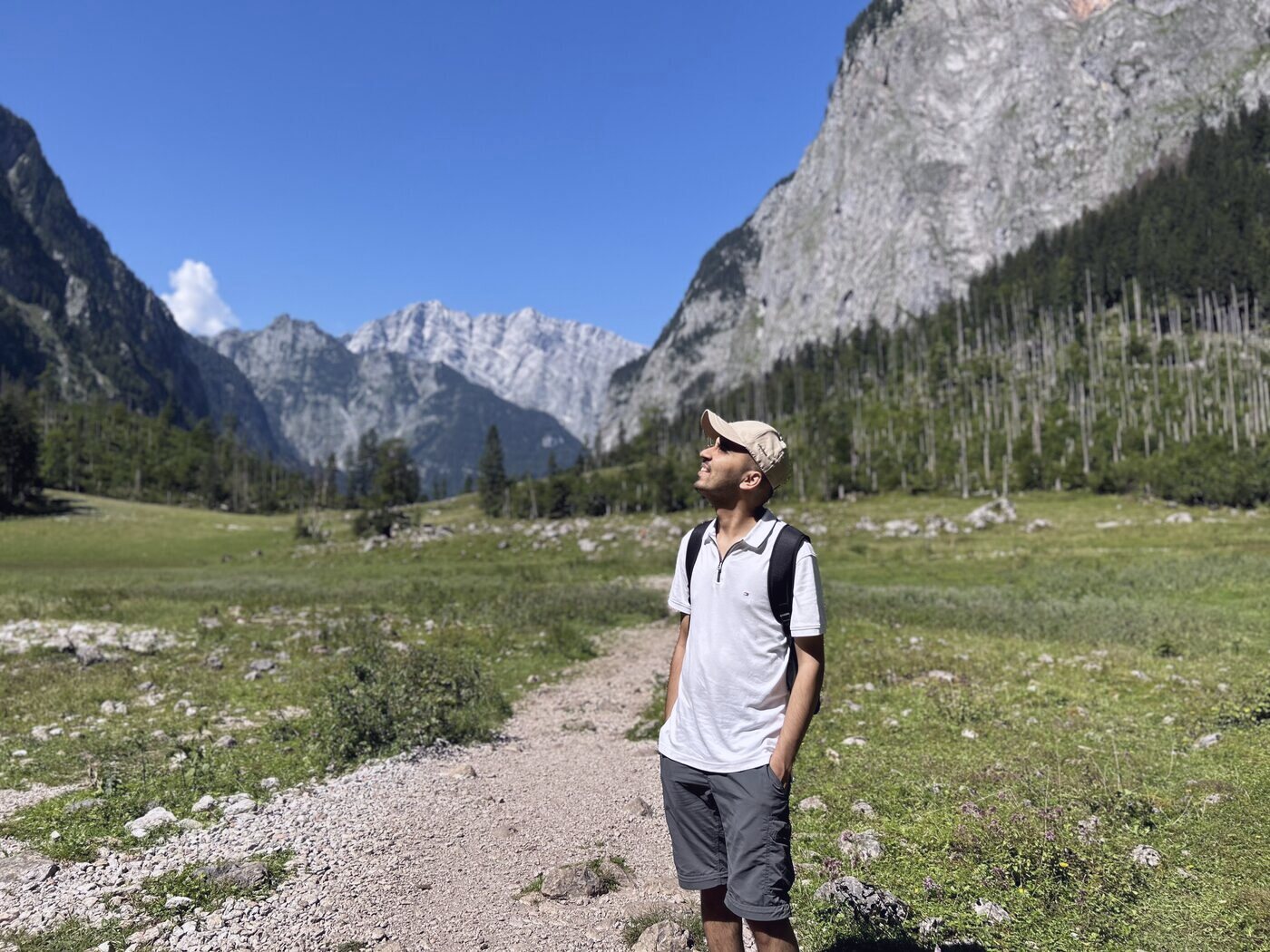
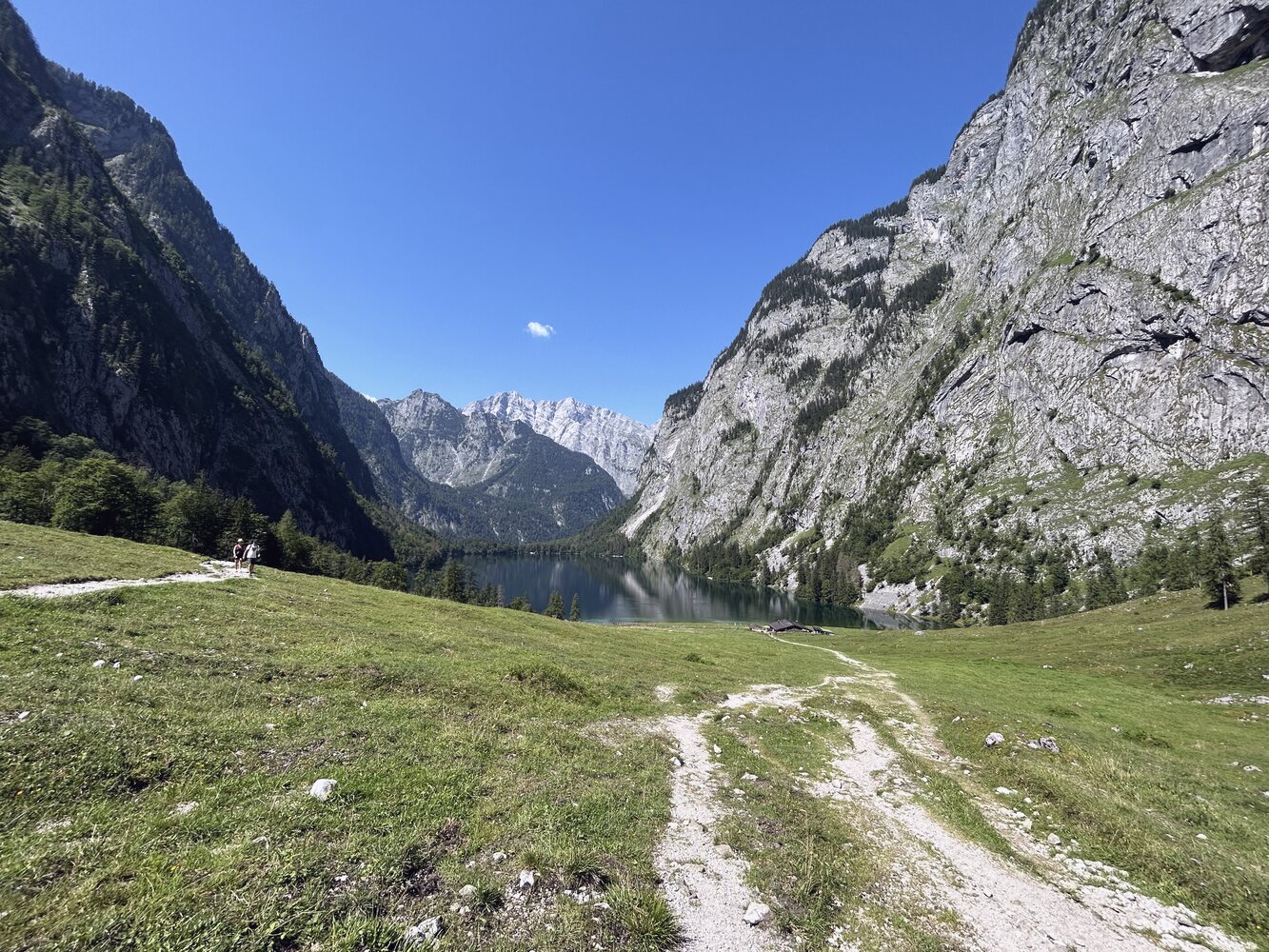
Hiking near Berchtesgaden, on the German-Austrian border.
## My first startup
I joined BlueJeans, a video company with an odd name that few people had heard of. It turned out to be the best career decision I made. It was where I first understood what a startup is: venture funding, a flat hierarchy, a room full of low-ego, genuinely talented people. I met Krish, the CEO, while I was being onboarded, and I'd been invited to the company party before my first day. When I left, Pradeep, the site head who later became a global VP of innovation, said he thought of me like his own. I've worked in a lot of places since. BlueJeans is still the one whose culture I measure the others against.
Reputation does not cross borders. Output does.
## How I learned to build
The first thing I tried to build for myself was Spendzer, a banking app for teenagers, in Germany around 2018. A friend and colleague, Dapeng, and I built the first version ourselves on top of Marqeta and open-banking APIs, and I put more than €10,000 of my own money into it. It did not work, and the reason it did not work taught me more than any of the wins since. We were two engineers who could build the thing but were early, and slower than we should have been to learn how to sell it and raise for it. [I wrote the whole story up separately](/blog/too-early-teen-banking-startup/).
I have been a technical founder three times since. The way I work came out of all of it, and it is fairly consistent.
Sell before you build. I would rather find out a thing is wanted before I spend six months making it than after. Then I look for the real, repetitive workflows people already grind through by hand, because that is where a product has somewhere to stand. The job is to turn those into something that works, ship it, and get it to deliver a commercial outcome, not a demo. Take it from 0 to 1, then past 1.
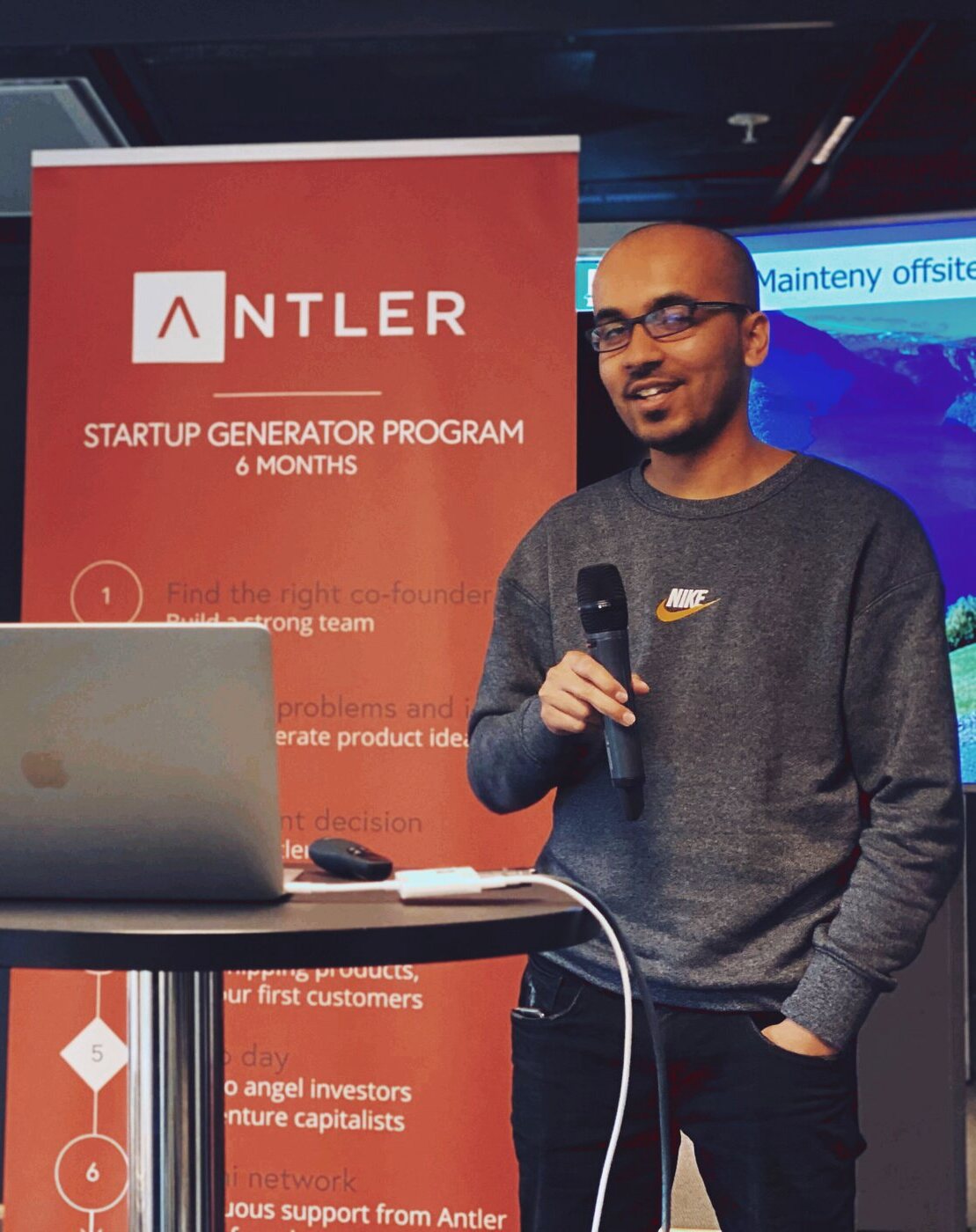
The record is concrete. Mainteny started at Antler, which wrote the first check: about 50 founders were chosen from more than 5,000 applicants, and my team was one of six funded out of seventeen that pitched the investment committee. The work I did there helped raise a $2.7M seed. Aura, which I built at Bain, went from $0 to $3.6M ARR in 15 months. Luminik, the one I am building now, is bootstrapped. No outside money means every decision has to pay for itself in something a customer will actually buy.
Pitching at Antler, Oslo.
I underestimated, for a long time, how much of building is selling and listening rather than coding. The engineering was the part I was sure of. The harder skill was understanding the customer's real problem before building anything.
## Who I am now
These days I am building Luminik, and Alfred, an open-source framework for running a fleet of coding agents. The work has not changed shape much from the Q-BASIC days. It is still the same loop: a hard problem, a machine, and the question of whether I can make the thing do what it is supposed to. I am drawn to problems that are difficult and unglamorous, the ones without an audience, because those are the ones still worth solving.
Away from the screen, I hike. I know the Alps around Garmisch and the German-Austrian border well enough now to have favorite trails. My wife [Neha](https://neha-prasad.com) and I travel to chase history and food, usually in that order. I read mostly technical writing, which my friends find funny and I find relaxing. I play a long game by temperament and I do not rattle easily.
Luminik is bootstrapped, which really means Neha paid the bills. For the stretch when I was building with no salary and no outside money, she covered our life and never made me feel like it was a favor. She talked through the hard problems with me and sat with me on the worst days. When I doubted the whole thing, she did not give me a speech. She just said, "I already believed in you when I married you." I don't take that for granted.
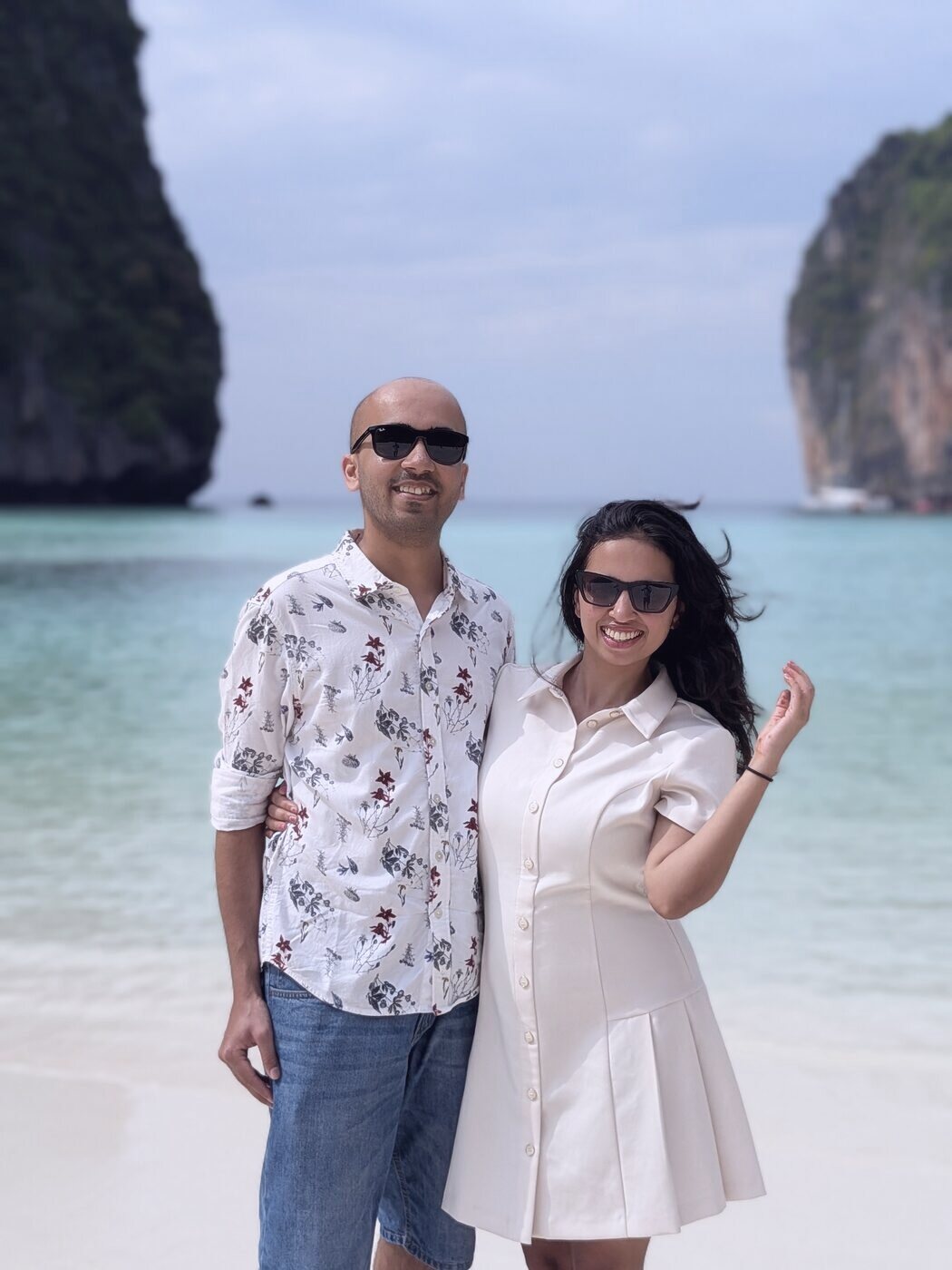
With my wife, Neha.
I came from a place with no path to this. I built the path by doing the work, and that is still the only method I trust.
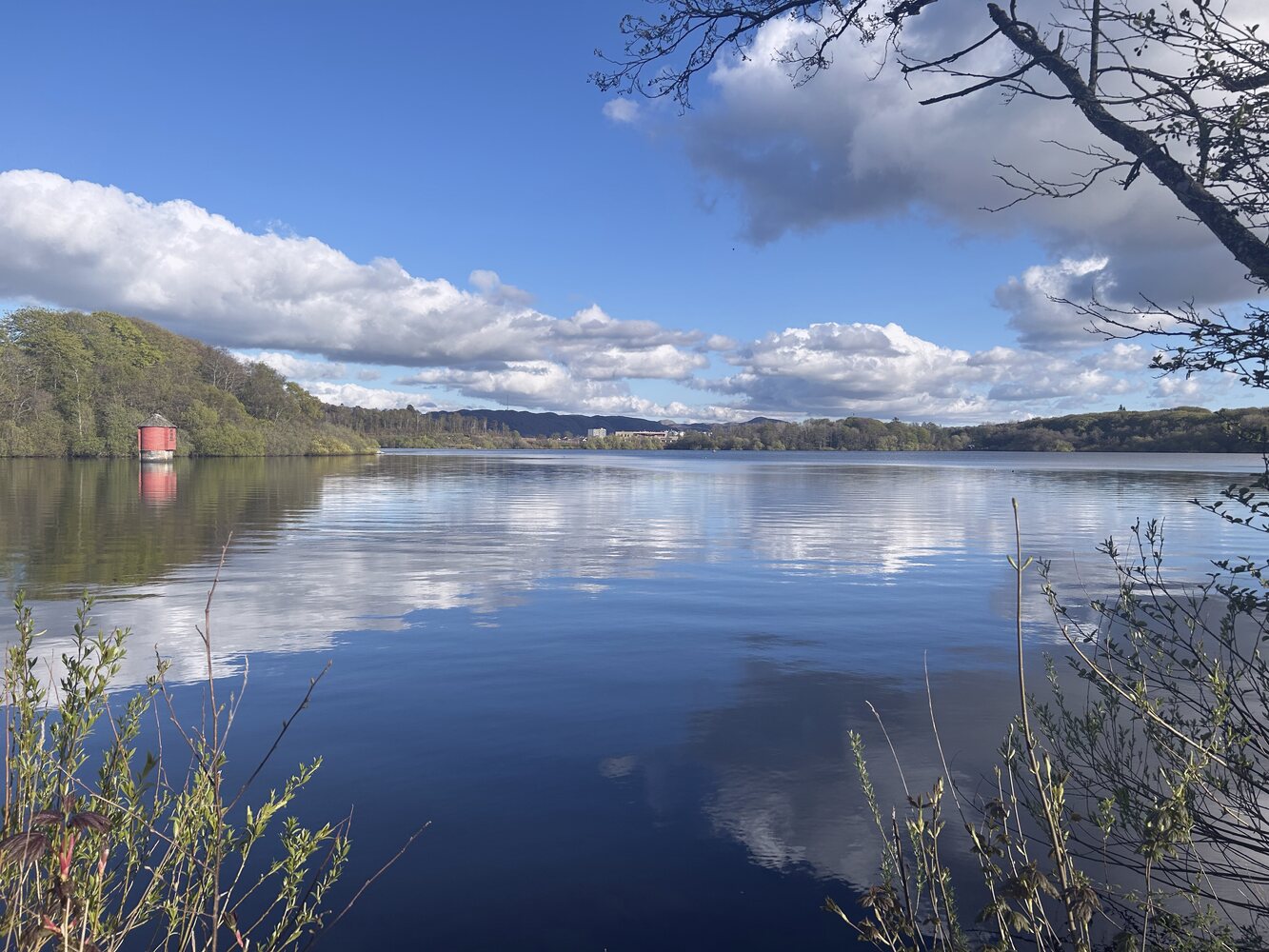
A few of the places we have been.